Sunday, October 19, 2014

What it's Worth

   Twenty-Ninth Sunday in Ordinary Time   A  
Two well-worn bills arrived at the Federal Reserve to be retired:
a twenty and a one dollar bill.
As they traveled together down the conveyor belt,
they struck up a conversation.
The twenty reminisced about
what an interesting and exciting life he’d had,
traveling all over the country.
“I’ve been to the finest restaurants, Broadway shows,
Hollywood and Las Vegas,” he said.  
“I even went on a lovely Caribbean cruise.
Where have you been?”
“Oh,” said the dollar bill, “I’ve been to the Catholic church,
the Methodist church, the Baptist church, the Episcopal church…”

Repay to Caesar what belongs to Caesar,
and to God what belongs to God.

Jesus asks those trying to trap him
if he might see a Roman coin—
cleverly proving that he doesn’t carry any,
but that the holier-than-thou Pharisees sure do.
(They may not want to pay taxes to a pagan government,
but its money isn’t so tainted
that they won’t carry some of it around in their pockets.)
The coinage bore the emperor’s likeness 
and his inscription—
much like our American currency is marked
with portraits of presidents and patriots
and the signature of 
the Secretary of the Treasury.
But there’s an important difference
between a U.S. dollar and a Roman denarius:
the emperor, right there on the coin, 
claimed to be divine.
What we have here is not a conflict 
between Church and state,
but between the true God and a false one.

“Whose image is this?” Jesus asks.
You won’t find him asking for a Jewish coin
to hold up alongside the Roman one—
a depiction of the heavenly Lord of Hosts
to contrast with the picture 
of an earthly emperor.
No—on their money as on anything else,
Jewish law strictly forbade making any image of God.
Why?
Because a sharper image of God could be found elsewhere:
not carved into statues or painted on canvases
or minted as spare change,
but in human beings themselves.
As God says on the sixth day in Genesis:
“Let us make man in our image, after our likeness.”
God then looked at what he had made,
and he found it very good (1:26, 31).
This deeply embedded faith of the Jewish people
was quite the opposite of the idolatry that surrounded them:
instead of creating gods that resembled human beings,
they believed in a Creator who made human beings
so that they would resemble God.
That’s a faith, of course, which would be perfectly fulfilled
when the Word became flesh, when God became man.
From the very beginning,
God had been modeling the human race on Christ.  (cf. J. Lienhard)

Jesus’ teaching here is thus not so much
about taxation or the interplay of politics and religion;
it’s about belonging.
These coins bear the image of the emperor;
give him all the coins he wants;
they belong to the emperor.
But you have been created in the likeness of God;

give him your heart and mind, your body and soul, 
your energy and resources—your entire self;
you belong to God.

As it is with money,
to whom we belong determines what we’re worth.
A woman who had suffered long and intensely
once approached her pastor and said through her tears,
“I have come to realize that I’m like an old twenty-dollar bill:
crumpled, torn, and dirty, scarred and abused. 
But I’m still a twenty-dollar bill. 
I am worth something. 
Even though I may not look like much,
and even though I’ve been battered and used,
I am still worth the full twenty bucks.”


I’m thoroughly convinced
that all the hurtful things done in the world today
are done because people don’t recognize
this innate, God-given dignity:
their own, or anybody else’s.
And that’s why, on this World Mission Sunday,
we must recognize the urgent need to spread this Good News.
We are living in mission territory!
We desperately need to help people—starting here and now—
to see their true dignity:
that they’re worth something;
that they’re worth everything—genuinely priceless, in fact.
And that this immense value of theirs doesn’t come
from what they own, or who they know,
or the things they might be able to accomplish.
They are worth something
because God has grasped them by the hand, called them by name,
given them a title—even if they know it not.
They have a Father who has chosen them because he loves them.
They have been marked as God’s own
simply by being formed in the likeness of his Son.
And if they receive Baptism,
and if they endure in faith, in hope, and in charity,
then that image can be restored to its original glory.

But if we’re ever going to help anybody else
to believe this astoundingly good news,
we must first believe it ourselves.

Do I belong to God?
Have I given my whole life to him, or only certain portions of it?
Do I recognize God’s image in me?
When I look in the mirror, do I see the likeness of Christ?
Do I believe that God made me, made me out of love,
made me for a specific purpose in his plan,
and made me good—very good?
Can I see my true dignity?
That real value comes not
from power or popularity or possessions?
That every person I meet is a priceless treasure?

You are worth so much more
than any pile of coins or stack of bills.
Give to the Lord the glory due his name!
Repay to God what belongs to God.
  

Sunday, October 12, 2014

More Than Guests


A parishioner came up to me after the first Mass this morning and said, "Thanks for that homily, Father.  My mother's not Catholic, but she's come with me to Mass many times.  And she always says, 'I'll never understand you Catholics!  When you come back from Communion, you just don't look happy.  Some of you actually look miserable.  I'll never figure you guys out!'  Father, I can't wait to get home and tell her what you said..."

   Twenty-Eighth Sunday in Ordinary Time   A  
I turned 40 on Wednesday,
and on Friday night my family threw a party.
It was a real feast, with lots and lots and lots of food.
But what made the celebration
wasn’t nearly as much the cuisine on the table
as it was those who were gathered together to share it.
I would have been a bit disappointed, of course,
if any of the invited guests had failed to appear.
But just imagine if all the balloons were hung,
the table was set, the cake was baked…
…and I hadn’t shown up.
I sure would have had some explaining to do!


Now, my birthday party was no royal wedding—
as we hear about in Jesus’ parable this Sunday—
but there is a parallel in imagining a grand banquet
to which the guest of honor never comes,
or arrives not properly disposed.

When Jesus tells a story,
we know it isn’t just a story…and this one is no exception.
The king is God, and the king’s son is Jesus.
The wedding banquet is an image of heaven—
but it’s also the new life God offers us here on earth,
one that we taste most unmistakably in the Eucharist.
The king’s servants are prophets and apostles.
The first guest list is made up
of those who fail to heed their message;
the second, of those on the margins.

So much for what’s in the story.
How about what’s missing?
All this talk of a wedding,
and there’s not a single mention of the bride.
Where is she?
Better yet, who is she?
Well, if the king’s son is Christ,
then we know that the bride is his Church.
The bride is you and me.

No matter the outward appearance of the building—
however humble or opulent—
whenever we come to church for Mass,
the Lord is taking us into his house
and spreading a table before us
with juicy, rich food and pure, choice wine.
But the King gathers us in not just as so many guests:
we are to enter into an intimate union—a holy communion—
with his Son.
This is where heaven and earth, God and man,
come together to be joined as one.

That’s how we can make sense
of some of the stranger twists in this Sunday’s parable.
The king reacts so strongly to news of his deadbeat guests
because it’s actually the bride
who’s failed to show up for his son’s wedding.
And the king’s feelings are so intense
about a missing wedding garment
because, in fact, the bride now shows up…
…but without putting on her dress.

A priest friend recently shared with me
an insight that he’d read or heard
on our sense of being “invited” by the Lord
to come here to Mass.
Someone who receives an invitation to a dinner party
is free to take it or leave it,
depending on how interested they are or if they get a better offer.
But the Eucharist is less like a dinner party
and more like a family supper.
You aren’t invited to a regular family supper;
you’re expected.
Your absence is noted
because your presence has been anticipated.
And if you show up to the table in body
but your attention is obviously elsewhere,
that will certainly be noticed, too.
You’ll be missed when you’re missing
only because you’re so deeply loved.
You are so much more than an invited guest!
Although born a commoner,
you have been chosen to become a member of the royal family.
Your place at the king’s supper table is reserved,
and this is a standing appointment not to be neglected.

When I look out into the pews on most Sundays,
I must say I don’t see folks who look like they’re at a wedding;
to tell the truth, I see folks who look a lot more
like they’re at a funeral—quite possibly their own!
What ought to be seen—on my face as much as yours—
is the look I see on a bride’s face
as she takes her walk down the aisle:
smiling, beaming, unable to hide her happiness and excitement
at the wonderful thing about to take place.

In light of Jesus’ challenging parable,
we all need to stop and ask ourselves:
Why am I here?
Do I come to church because of some sense of duty,
to fulfill a stern obligation, out of fear of hell?
Or do I come to Mass 
because I’m filled with love, joy, and devotion
at the thought of the one who awaits me here?
If you’re happy to be here,
then make sure your heart gets the message to your face!
Your disposition in coming to Mass
will affect what you’re able to take from it.
It will also affect who else decides to join us here.
We certainly don’t want to leave Jesus jilted at the altar.
But neither is it enough for us to simply show up.
A little preparation is required of each one of us.
It matters how and why we’ve come.

When Jesus tells a story, it isn’t just a story.
And when Jesus serves a meal, it isn’t just a meal.
The Eucharist is a royal marriage banquet—
it is the wedding supper of the Lamb of God.
Don’t get caught having to explain your absence!
Come clothed in joy to be joined again
with the Bridegroom of your soul.
You've not only been invited
you've been chosen.
  

Saturday, October 11, 2014

Comes & Goes

This one is cute...but also makes me a little sad.

As the post says on YouTube:
I grew a beard until my wife proclaimed it's robust awesomeness was overwhelming for her heart. RIP Beard. You were loved.
I have not yet been overwhelmed (although I think a few were last winter--my mother included).  Keep bringing on the awesomeness, I say.


Touchdown!

This one was a really big win...


Friday, October 10, 2014

10 x 4 = 40

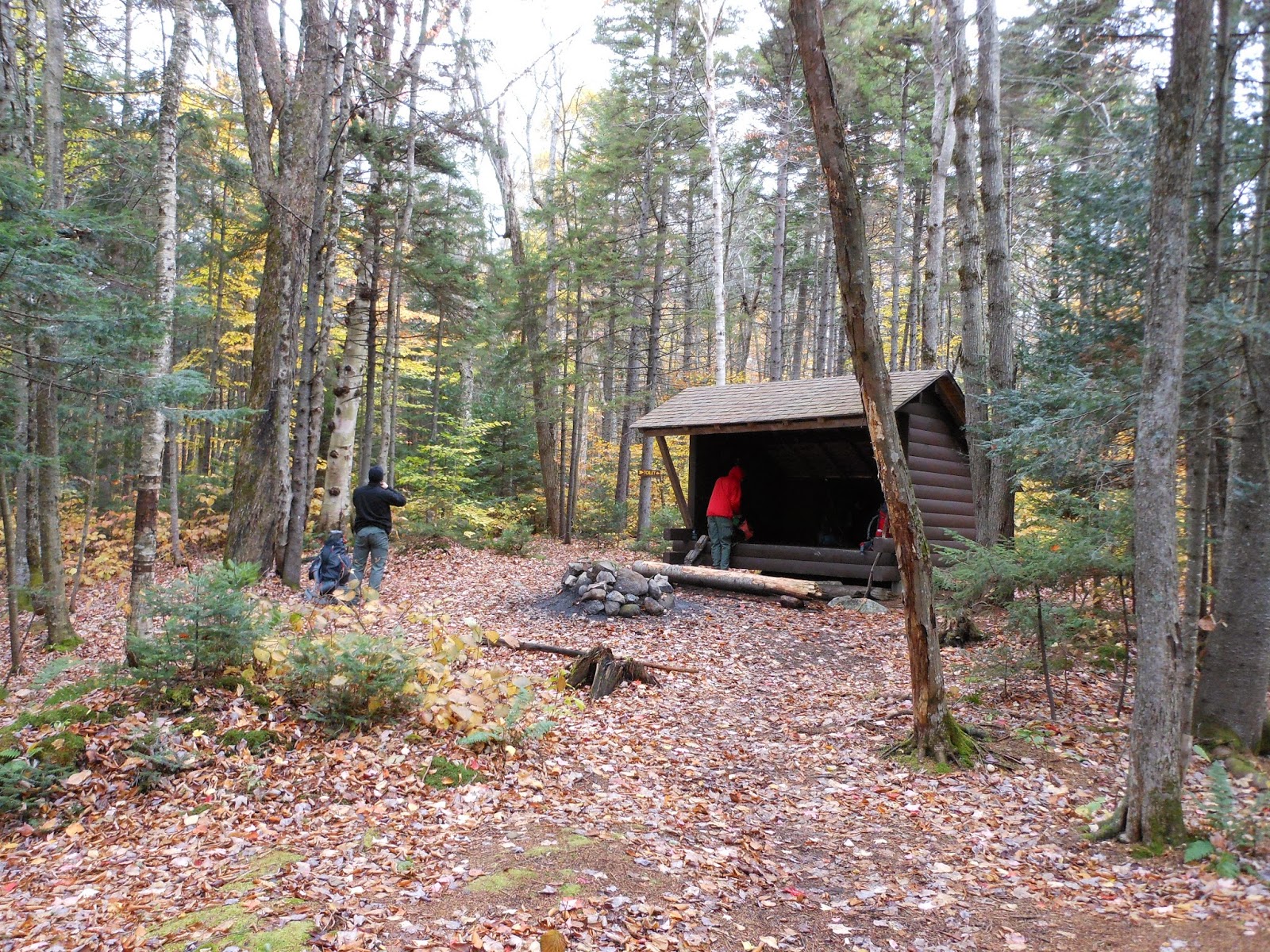
This being the 10th month of my year-long project, 4 of us (Fr. Stitt, Fr. Scott, Paul and I) headed into the woods on Wednesday--my idea of the perfect way to mark my 40th birthday.

On the way to Duck Hole just a couple of weeks ago, Fr. Scott and I discovered a practically perfect campsite: a rather new lean-to overlooking Lake Henderson with a nice open site and a small waterfall very nearby.  We knew we need to come back and camp there...and this seemed to be just the right opportunity.


It had only been two weeks since hiking to this spot, but the place looked very different: so many of the leaves we had earlier admired brilliantly glowing in the trees were now dull and wet, lying scattered on the trail.  Nonetheless, the place was still beautiful.

We hiked in the 2 miles to the lean-to with our gear on our backs, but with a little something extra in our hands: firewood.  We knew we wanted to have a campfire, and we also knew how hard it can be to find dead, down, and dry wood for one around a campsite--especially when it's been raining.  We all agreed the extra burden was well worth it...and spent a lot of time discussing how we could improve on our transport system.


After leaving off the gear and wood, and eating lunch, we left on a 6.8 roundtrip up into Indian Pass.  I had hiked into the Pass once before from the other end...but that was 20 years--half a lifetime--ago!  It was the first solo hike of any significance I ever took, so it somehow seemed like a good fit on this auspicious occasion.

The trail was very wet (so wet it was actually flowing in places), and the streams were running very high and fast.  In fact, at one point, finding no other way across, we took off our boots and waded through a rather chilly and swift stream.  (Of course Paul had to be different: being rather sure-footed, he managed to jump across on a few stones lying just beneath the surface of the water.)


It was raining now, too, as we made our ascent in the last half mile of the trail, up to Summit Rock, near the height of the Pass.  It's a scramble over and around giant rocks (many of which are the size of most folks homes), tossed all about with abandon.


At Summit Rock, you're given quite a unique perspective, as that primordial rock pile tumbles down beneath you about 1,000 feet, and the cliff face of Wallface Mountain (the northwest side of the Pass) rises another 1,000 feet above you.  We also had a nice view to the southwest back toward camp.


As a visitor in the 1840's said of this wild spot:
I lay on my back filled with strange feelings of the power and grandeur of the God who had both framed and rent this mountain asunder.  ...How loudly God speaks to the heart, when it lies awe-struck and subdued in the presence of His works.  In the shadow of such a grand and terrible form, man seems but the plaything of a moment, to be blown away with the first breath.  ...[T]hat wall of a thousand feet perpendicular, with its seams and rents and stooping cliffs, is one of the few things in the world the beholder can never forget.  (Rev. J. T. Headley)
We made it back to Henderson a little later than we'd hoped, but agreed the sacrifice of time and dryness was well worth it.  We warmed ourselves by the fire with food and good humor...and maybe even a Birthday toast or two.


The night was windy, which gave us occasional glimpses of the nearly full moon (that had been in total eclipse just before sunrise).  There were forecasts of potential snowfall, which did materialize on some nearby peaks but not where we were staying.  (I don't think the temperature fell too far below 40° F.)  A little sleet during Morning Prayer was all the frozen preciptation we got.

We took our morning at leisure--very leisurely, actually--before hiking back to the car, visiting the massive ruins of the blast furnace of McIntyre iron mine , and getting a hot lunch at the Adirondack Hotel in Long Lake.


I'm glad I've got such good friends who were willing to join me in such a beautiful place as I made my way "over the hill."

Sunday, October 5, 2014

Caveman

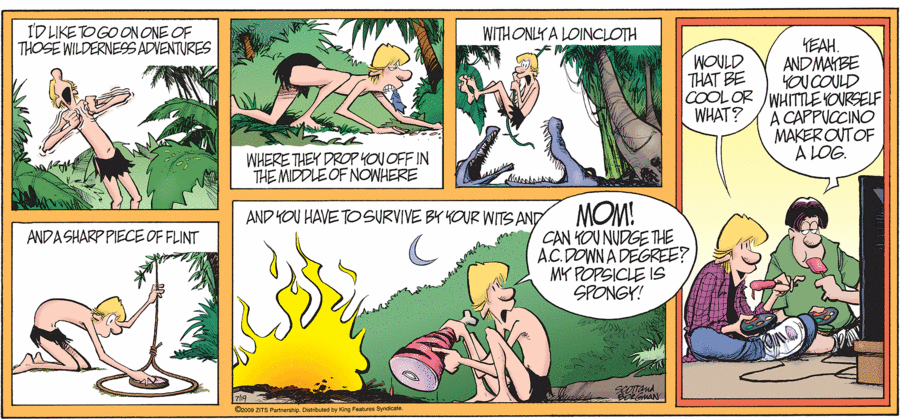
So, first I hear a radio program this morning all about modern folks voluntarily "Living Like a Caveman" (you know, eating raw meat, running barefoot, and pulling their Land Rovers around with a rope--that sort of thing),  and then I see this in the Sunday comics:


Maybe it's time for another wilderness adventure of my own...
 

Fruit of the Vine

Since preparing this homily, I've learned that October 9th is "Leif Ericson Day." 
Be sure to get some wine and celebrate!

   Twenty-Seventh Sunday in Ordinary Time   A  
Fr. Justin and I were trying to schedule something the other day,
and I pointed out to him that we have a holiday coming up: Columbus Day.
Christopher Columbus?” he asked.
“Yes,” I said.  “You know—he discovered America.”
“Oh, I know,” replied Fr. Justin, with a big smile on his face.
“But he thought he was in India!”

Columbus is a big part of our national myth.
I say “myth” for several reasons.
For one thing, he was so far off track.
For another, 
it’s hard to say he “discovered” the continent
when quite a few folks already called this land home.
Not to mention most scholars today acknowledge
that this Italian explorer sailing on behalf of Spain
wasn’t actually the first European 
to lay eyes on North America,
but was beat to the punch by a Norwegian—a Viking—
almost 500 years before him.

About the year 1000,
very shortly after he converted to the Christian faith,
the Norse explorer Leif Ericson
was blown off course west of Greenland
and landed in a lush and fertile place
(quite possibly modern day Newfoundland)
which he described as “covered with vines and grapes
that produce the best wine.”
He therefore called the place Vinland.


This is our third week in a row in the vineyard,
as far as parables told by Jesus are concerned.
And as far as the original planting goes,
this Sunday’s Psalm makes it clear:
The vineyard of the Lord is the house of Israel.
Jesus, however, drastically expands the vineyard's boundaries—
encompassing not just one small yet chosen nation,
but instead branching out 
to the four corners of the earth.
Despite the fact that corn, potatoes, and apples
all grow much better around here than grapes,
Leif Ericson was right: we live in Vinland.

And if this is God’s vineyard,
then that makes us God's tenant farmers.

Many words of Scripture are written
encouraging us to trust in the Lord.
“Have no anxiety at all,” St. Paul tells the Philippians.
“Make your requests known to God.”
It feels good to able to trust somebody—
to allow them to handle our affairs;
to believe they’ll always act in our best interests.
But is also feels good to be trusted—
to be put in charge of something;
to know that another had placed their confidence in us.
As much as we must trust in God,
we’re reminded this Sunday that God also puts his trust in us:
trusts us, as he has trusted earlier peoples and generations,
to be faithful caretakers of his vineyard.

I think of this at the start of this annual Respect Life Month.
It’s a rather sad commentary
that we even have to have such an observance—
that people today must be reminded 
that every human life is a precious gift from God,
immense in its dignity, and worthy of being defended.
Whether it’s the tender new shoot
growing hidden in its mother’s womb,
or a bent old vine approaching life’s end;
whether the threat comes
from poverty or shame, vengeance or indifference—
God has placed great trust in us for the ongoing care
of the most vulnerable plants in his vineyard.
When the Lord comes looking for his harvest—and he will—
how shall we answer for this fruit of our human bodies?

I also think of the trust God has placed in us
as I’ve been daily reading about unfolding scandal
on the front page of the local paper,
and hearing the grapevines rattle
with a whole lot of gossip in the parish of late.
As we see in this parable of Jesus,
fear, jealousy, and greed are more than capable
of working people into a frenzy,
such that they'll believe fantasies instead of facts
and stop at nothing to achieve their mistaken goals.
Ridicule and character assassination can be just as vicious
as the stoning of the landowner’s servants and murder of his son.
We betray God’s trust whenever we betray one another.
When the Lord comes looking for his harvest—as he surely will—
how shall we answer for this fruit of the human spirit?


God is just.
In the end, truth and goodness prevail.
The Lord has no real need to condemn us,
since we’re more than capable of doing so ourselves.
But God is also merciful.
The Lord gives us ample opportunity—
more chances than we actually deserve—
to get back on course 
and begin to cultivate anew the vast and noble estate
in which he has set us.

We live in Vinland.
And God has given us incredible reasonability over it.
We trust in the Lord.
Let us likewise prove ourselves trustworthy,
producing not bitter wild grapes,
but the good, sweet fruit of the kingdom.

with inspiration from J. Sacco and A. Lauer

Saturday, October 4, 2014

Walls or Doors?

I heard a great song on the radio this morning, which started off with the thought-provoking lyrics:
       Ever since the world's existed
       There's one thing that is certain
       There are those who build walls
       And those who open doors
       Ah but this my love
       I'm thinking you already knew 
It's called "Walls and Doors," off of a soon-to-be released album by Jackson Browne.  It's translated from the song, "Muros y Puertas," by Cuban singer/ songwriter Carlos Varela.  You can find all the (English) lyrics here, and listen to the song here.  
 

Friday, October 3, 2014